
VICE PRESIDENT CALLS FOR TECHNOLOGY-DRIVEN TAX COLLECTION, URGES CATA TO DELIVER MEASURABLE RESULTS
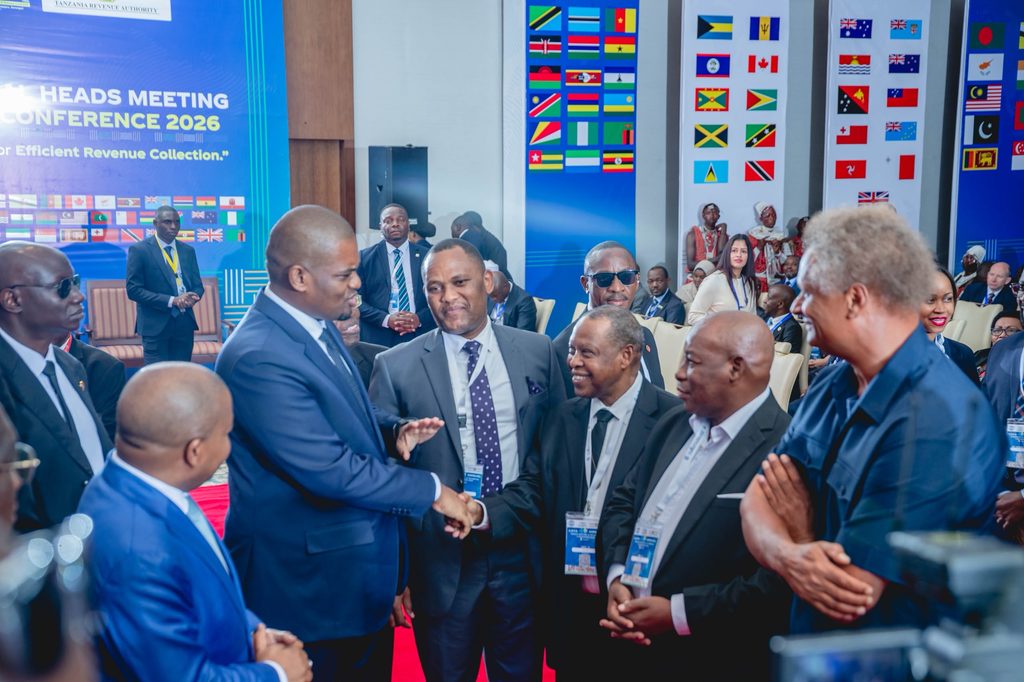
ARUSHA, TANZANIA
Vice President of the United Republic of Tanzania, Hon. Deogratius Ndejembi, has called for greater use of technology to make domestic revenue collection more efficient, fair and effective, enabling countries to finance their development priorities through domestic resources.
The Vice President made the call while representing President of the United Republic of Tanzania, Dr. Samia Suluhu Hassan, at the opening of the 46th Annual Meeting of the Commonwealth Association of Tax Administrators (CATA) in Arusha.
He said a well-functioning tax system should provide certainty, facilitate legitimate businesses, encourage investment and formalisation, and enable the private sector to play its role in driving economic transformation, in line with the objectives of Tanzania’s National Development Vision 2050.
“Tax collection should not constrain productive economic activities; rather, it should support and facilitate them,” he said.
Ndejembi said sustainable growth in domestic revenue should be anchored in economic growth, formalisation of businesses and economic activities, expansion of the taxpayer base, voluntary compliance, effective use of data and technology, and a tax system that evolves alongside the economy.
He also called for international tax cooperation to produce practical and measurable outcomes, saying platforms such as CATA should help member countries assess performance, exchange information, strengthen administrative cooperation, learn from effective tax systems and translate international experience into measurable domestic reforms.
“Tanzania recognises the importance of international tax cooperation and is strengthening its engagement at the global level, including through the exchange of tax information and mutual administrative assistance,” he said.
The Vice President noted that Tanzania was internationally recognised in July 2026 as meeting the criteria for tax transparency and the international standard on the exchange of information upon request.
He described the recognition as an encouraging milestone, but said it also underscored the need for Tanzania to continue strengthening its legal frameworks and institutional capacity as international tax standards evolve.
Ndejembi said international cooperation was also essential to strengthening tax certainty, noting that effective information exchange, efficient prevention and resolution of tax disputes, and clear coordination among tax authorities could help protect government revenue while reducing the risk of double taxation and uncertainty for legitimate investors.
He said the effective mobilisation and use of domestic resources remained central to Tanzania’s development strategy, with taxation playing a key role in financing public services and infrastructure, promoting formal economic activity, supporting productive investment and strengthening economic self-reliance.
Under the 2026/27 national budget, Tanzania expects to collect Sh36.99 trillion in tax revenue, while domestic revenue is projected to finance approximately 74.2 per cent of the national budget.
The Vice President said the figures reflected continued progress towards strengthening the country’s capacity to finance its development priorities from domestic resources.
He further said President Samia Suluhu Hassan had consistently emphasised the importance of technology, fairness, taxpayer participation and quality services in tax administration.
According to Ndejembi, modern tax systems should reduce unnecessary interactions between taxpayers and authorities, improve transparency, support risk-based enforcement and make it easier for compliant taxpayers to fulfil their obligations.
Speaking under the theme “Leveraging Technology for Efficient Revenue Collection,” the Vice President said technology should be used to simplify voluntary tax compliance, identify non-compliant taxpayers, reduce administrative costs, improve taxpayer services and create a more enabling environment for legitimate businesses.
Tanzania, he said, has continued to modernise its tax administration and tax policies in response to rapid technological developments. Tax and customs systems are increasingly being integrated with other government systems, while legislation is being adapted to developments in digital commerce, including electronic service providers based outside Tanzania and businesses operating through digital platforms.
The reforms, he said, are intended to ensure a fairer balance between traditional and digital business models while strengthening the country’s revenue base.
CATA President Dr. Abu Tariq Jamaluddin said the association brings together tax leaders and professionals who learn from one another and work collectively to improve tax administration across Commonwealth countries.
He said CATA had strengthened its programmes over the past year through initiatives focusing on leadership, planning and technology, as well as online discussions and knowledge-sharing activities.
Jamaluddin said the association’s priorities include promoting good tax governance, facilitating voluntary compliance, improving the efficiency of tax officials and strengthening the use of data in tax administration.
Earlier, host of the meeting and Commissioner General of the Tanzania Revenue Authority (TRA), CPA Yusuph Mwenda, commended President Samia Suluhu Hassan for her leadership in advancing digital transformation to facilitate tax administration and revenue collection.
Mwenda said the Government had invested in several modern systems, including the Integrated Domestic Revenue Administration System (IDRAS), which comprises 17 modules.
One of the modules enables taxpayers to issue electronic invoices without relying on physical invoicing machines, he said, describing the development as part of wider efforts to modernise tax administration and make compliance more convenient for taxpayers.
The 46th CATA Annual Meeting has brought together more than 400 tax experts and leaders from 48 Commonwealth countries to exchange knowledge and experience on improving revenue collection through modern technologies.
The meeting provides a platform for member countries to share practical approaches, discuss emerging challenges in tax administration and explore ways of using technology and international cooperation to strengthen domestic revenue mobilisation.
