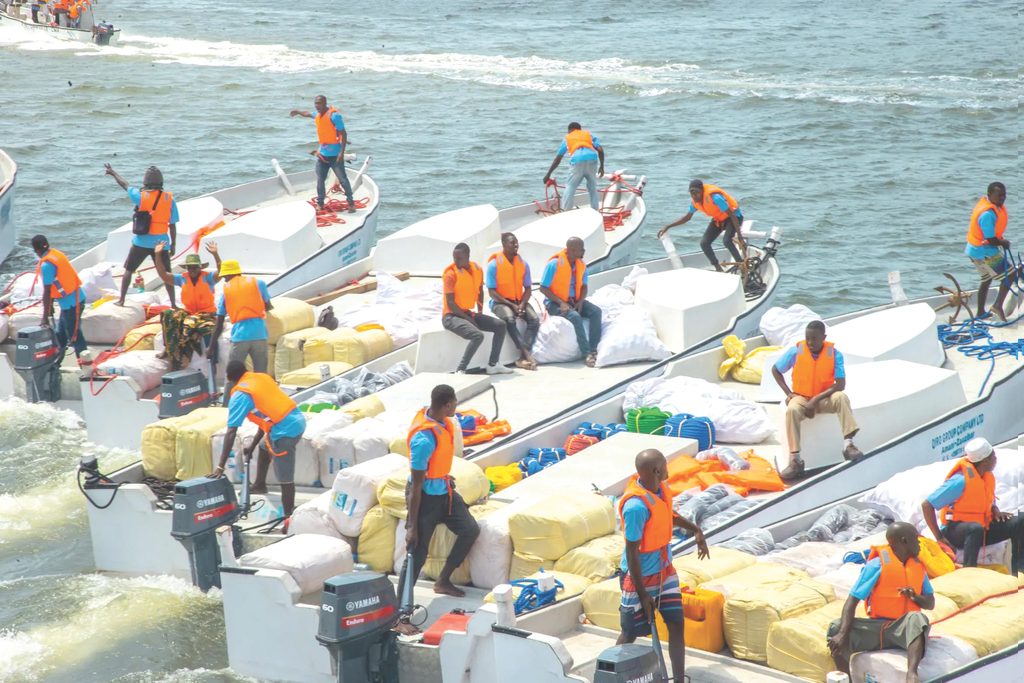
How fisheries are powering Tanzania’s blue economy Recasting an overlooked sector
Often overshadowed by crop agriculture, Tanzania’s fisheries sector has long been treated as peripheral—a fragmented, informal livelihood rather than a strategic economic asset.
Yet under President Samia Suluhu Hassan, fisheries have emerged as a central pillar of rural development, food security and the country’s growing blue economy agenda.
Since 2021, the government has undertaken deliberate reforms to transform fishing from a survival activity into a structured, regulated and increasingly productive industry. The rationale was clear: despite Tanzania’s vast aquatic wealth—from Lake Victoria and Lake Tanganyika to an expansive Indian Ocean coastline—the sector remained underperforming due to poor infrastructure, post-harvest losses, outdated equipment and weak market access.
Addressing these gaps has begun to pay dividends.
Landing sites, cold chains and market access
One of the most visible changes has been the construction and rehabilitation of fish landing sites across major fishing zones. Facilities bordering Lake Victoria, Lake Tanganyika and coastal regions have been upgraded to meet hygiene, safety and export standards.
Equipped with cold rooms, ice-making machines, storage facilities and sanitation blocks, these sites have dramatically reduced post-harvest losses—one of the sector’s most persistent challenges. For fishing communities in Mwanza, Lindi and Tanga, better infrastructure has translated directly into higher incomes and improved product quality.
In Mwanza, the modernisation of Nyamagana Fish Market stands out. The facility now functions as a regional trade hub, complete with processing units and cold storage, attracting traders, processors and young entrepreneurs eager to tap into value-added opportunities.
Aquaculture: Reducing pressure, expanding opportunity
Alongside capture fisheries, aquaculture has been actively promoted as a sustainable growth frontier. Recognising rising fish demand and pressure on natural stocks, the government expanded hatcheries, improved access to fingerlings, and rolled out targeted training programmes.
In 2023, the Aquaculture Development Programme was launched, supporting youth and women’s groups with startup kits and technical assistance in regions including Morogoro, Njombe and the Coast Region. For many households, fish farming has become both an income stream and a source of improved nutrition.
“Fishing used to be seen as hard, dirty and unrewarding,” said Neema Juma, a beneficiary of a women-led aquaculture project in Rufiji. “Now, with government support, we are running real businesses from our ponds.”
Sustainability, Security and regional trade
President Samia’s reforms have also prioritised sustainability. Patrol boats have been deployed to curb illegal and destructive fishing practices, particularly in Lake Nyasa and coastal waters. Strengthened monitoring systems are helping protect marine ecosystems while ensuring long-term viability for fishing communities.
At the same time, Tanzania has improved cross-border fish trade facilitation by harmonising licensing procedures and strengthening compliance with regional standards. As a result, Tanzanian fish products are gradually regaining credibility and access in regional and international markets.
Livelihoods transformed
These changes are more than policy successes—they are reshaping lives. Artisanal fishers now operate in safer, cleaner environments. Women’s cooperatives and youth groups, once excluded from capital and storage facilities, are integrating into organised value chains with dignity and improved earnings.
Through infrastructure, regulation and targeted investment, President Samia’s administration has repositioned fisheries as both an economic engine and a social equaliser—proof that when policy meets purpose, even overlooked sectors can deliver national impact